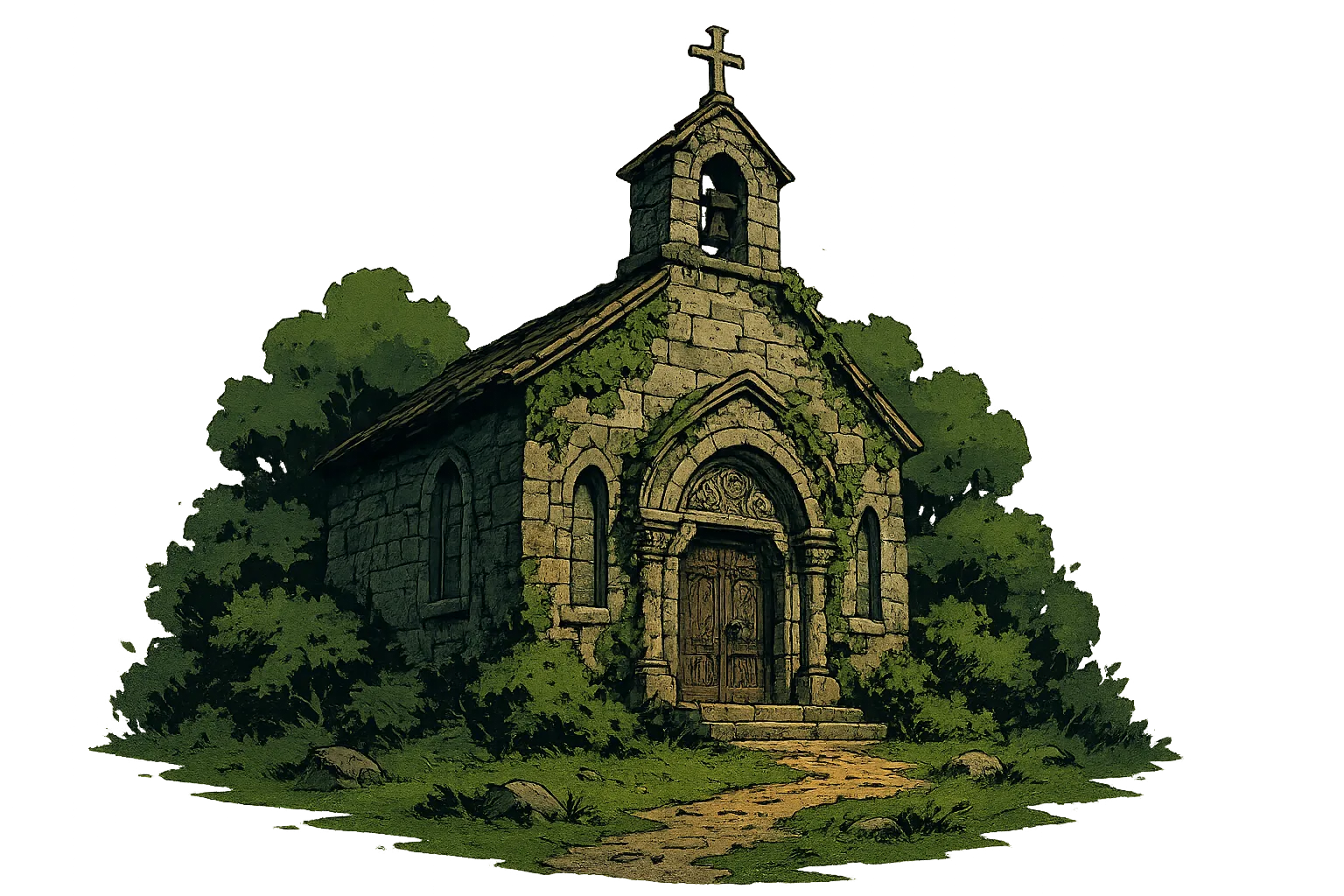
A small, humble chapel to Elandria, the Lady of Light, Saint Andral’s sits a few hours ride outside of Balandel just outside of Vel Enweir, the Queen’s holy realm. Its single nave is narrow, with worn oak pews and walls whitewashed but cracked in places. A pair of tall, simple windows let in pale light, and the only ornament of note is a carved sunburst above the modest altar. A faint smell of smoke and bread lingers — from the tiny kitchen hearth just behind the sanctuary, where the priest cooks both his meals and the offerings of the faithful.
The priest lives in a single small room tucked behind the altar: a narrow bed, a desk covered with wax-stained prayer scrolls, and a chest at the foot of the bed containing vestments patched more often than replaced.
Beneath the chapel lies the cellar, damp and cool, where St. Andral’s tomb rests: a plain stone sarcophagus marked only with Elandria’s sigil and the words, “Mercy is Light.” The air is thick with dust, and the space is more storeroom than shrine, lined with a few casks of ale and jars of dried fruit. But those who kneel before the tomb sometimes report a curious warmth or a sudden sense of peace — as though Andral still listens.
Who Was St. Andral?
Saint Andral of Dawnfire was a healer during the First War. Stories say he walked the battlefields not with a blade but with an open hand, tending the wounded of both sides. He once spared an orc commander who later betrayed his mercy, leading to Andral’s death — yet it was this act of mercy that convinced his own people to honor him as a saint. To Elandria’s faithful, he is a patron of compassion, forgiveness, and second chances, and his tomb became a site of pilgrimage for the downtrodden, though it is little visited today.
Story
When Dravencoles visits the tomb, he feels a presence — not a voice, but a weighing. The stone warms under his touch, and for a heartbeat, the sound of his own pulse echoes like a distant bell. He sees an image in his mind: Talan Windfern’s face, terrified, and his own gauntleted hand raised to strike.
Then, faintly, the words seem to hang in the silence:
“Mercy is Light. Without it, even the brightest flame burns hollow.”
If he lingers, the warmth spreads into his chest, granting him a one-time boon: advantage on his next saving throw against corruption, wrath, or an effect that would push him to violence. But the weight remains — a reminder that his actions are being measured against the creed of mercy.