Description
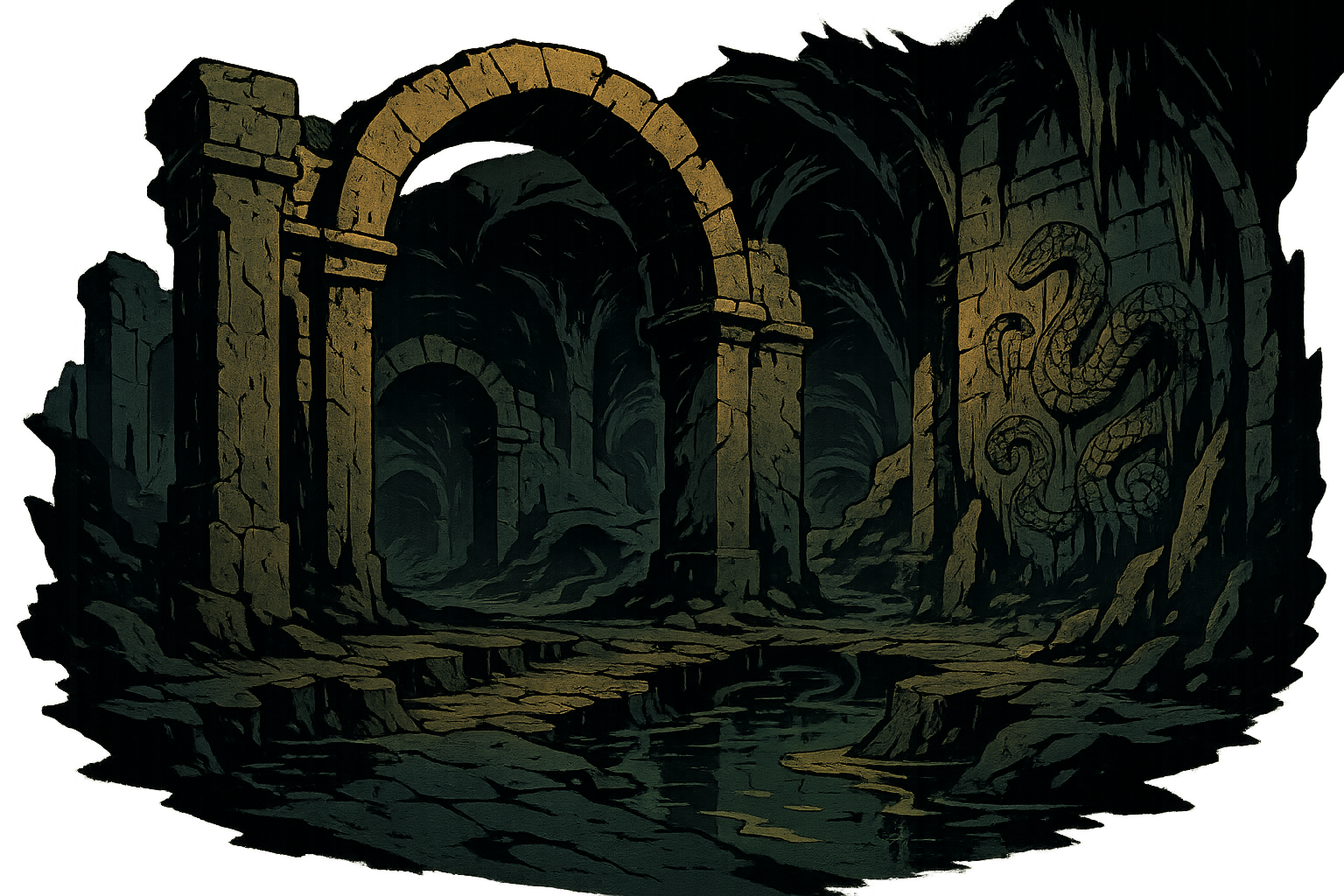
The Blacktide Beastiary is an ancient ruin deep within Blacktide Swamp, where crumbling stone archways and weathered pillars mark what was once a structure of significance. The ruin has collapsed into a massive underground cavern below, its entrance descending through broken masonry into darkness. The air is thick with moisture and the smell of decay, while the sound of dripping water echoes from unseen depths.
Inside the cavern, the space opens into a network of natural chambers connected by winding tunnels. Pools of stagnant, brackish water gather in low areas, and the slippery stone floors are treacherous. Ancient carvings on some walls hint at serpentine imagery—coiled snakes and scaled forms that suggest this place may have had connections to serpent worship long ago.
Background
The Cult of the Black Star has hired yuan-ti beast-masters to use this isolated location as a holding pen for three monstrous creatures intended for use in the siege of Southaven. The yuan-ti, led by Sseth’kara, have established themselves in the collapsed cavern and divided it into three separate beast chambers.
The yuan-ti’s motivation is access to an ancient serpent temple rumored to lie beneath Southaven, along with payment in rare arcane components and sacrifices for their dark god. They keep their three beasts—Venom Wing (a slimy, serpentine young black dragon), The Ravager (a hydra), and The Coil (a massive yuan-ti abomination)—in separate chambers, ready to unleash them when commanded.
::: The party will likely discover this location during the Siege of Southaven arc. When they arrive, the yuan-ti beast-masters will attempt to flee to their respective beast chambers to awaken the creatures. The party will need to make tactical decisions about which beasts to pursue and stop, knowing that at least one is likely to escape toward Southaven.
Yuan-ti infiltrators stationed at other siege locations (Northern Blockade, Fort Hellrock, or the Goblin War Camp) can reveal information about the Beastiary if interrogated.
The ancient carvings suggest this ruin may have been connected to the serpent temple the yuan-ti seek beneath Southaven, making it a location of historical significance beyond its current use. :::